

Your wedding morning should feel special, not like a race against the clock. Between bridal makeup, hairstyling, getting dressed, saree draping, jewellery, photography and the journey to your ceremony, there are several details to coordinate. Without a realistic plan, even a well-organised bride can find herself rushing through moments she hoped to enjoy.
A well-prepared Complete Bridal Beauty Schedule gives every stage of your wedding-day preparation enough time, while leaving room for unexpected delays. It also helps your makeup artist, hairstylist, draping professional, photographer and family members understand when they need to be ready.
For brides planning their celebrations in London, preparation can be particularly important when the ceremony involves traditional bridal attire, multiple outfit changes or travel between getting-ready and ceremony venues. A look that includes intricate eye makeup, elaborate hairstyling, a dupatta or veil and carefully arranged jewellery requires coordination rather than guesswork.
Working with a professional bridal makeup artist London brides can consult during the planning process can help establish a realistic beauty timeline based on the chosen look, attire, venue arrangements and ceremony time. For brides seeking asian bridal hair and makeup London, coordinating the makeup and hair sequence with saree draping and dressing is especially useful.
This guide explains how to build a practical bridal beauty schedule, avoid common timing mistakes and prepare for final touch-ups so you can approach your wedding day with greater confidence.
A bridal beauty schedule is more than a list of appointment times. It is a sequence of connected tasks that need to happen in the right order.
For example, completing a hairstyle before putting on a fitted blouse may be sensible if the outfit needs to be pulled over the head. In that situation, getting dressed carefully may require assistance or a protective dressing method. Similarly, a hairstyle that needs a secure dupatta placement may need to be coordinated with the draping appointment rather than treated as a completely separate task.
When these details are discussed in advance, the morning becomes easier to manage.
Your schedule should account for:
The exact order will depend on your outfit, hairstyle, venue and cultural traditions. A bride wearing a traditional saree may have different preparation needs from someone wearing a lehenga, gown or a combination of outfits.
The aim is not to follow a rigid universal timetable. It is to create a realistic bridal beauty schedule that suits your individual wedding.
The easiest way to plan your wedding morning is to work backwards from the time you need to be ready.
First, establish the time you must arrive at the ceremony venue. Then account for travel, photography, getting dressed and all beauty appointments. This gives you a practical starting point for deciding when preparation should begin.
Before booking or finalising beauty appointments, confirm:
If your ceremony begins at 1 pm, for example, you should not automatically plan to finish makeup at 12.30 pm. You may still need to dress, arrange jewellery, secure the dupatta, take photographs and travel to the venue.
Your actual ready-by time should be earlier than your departure time, with enough flexibility to handle small delays.
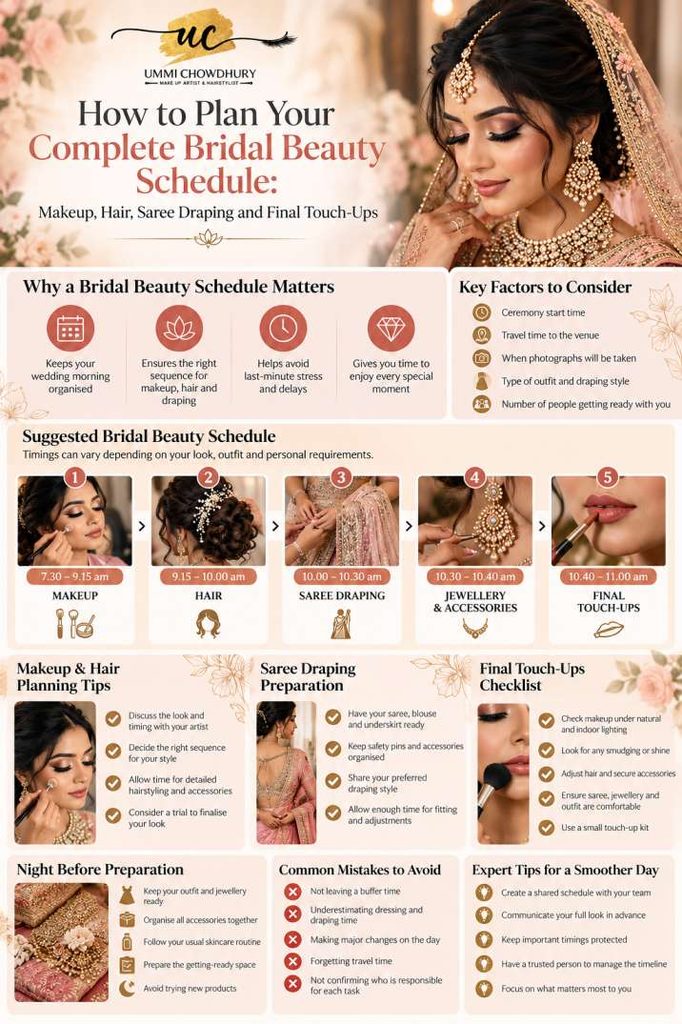
Consider this illustrative example for a bride who wants to leave her getting-ready location at 11 am.
| Preparation stage | Illustrative time |
|---|---|
| Bridal makeup | 7.30–9.15 am |
| Hairstyling and accessories | 9.15–10.00 am |
| Dressing and saree draping | 10.00–10.30 am |
| Jewellery and finishing details | 10.30–10.40 am |
| Final touch-ups and photographs | 10.40–11.00 am |
| Departure | 11.00 am |
This is only an example, not a recommended duration for every bride. Intricate hairstyles, detailed bridal makeup, elaborate saree pleating or multiple people sharing one preparation space may require a longer schedule.
Ask your chosen artist and other professionals to estimate the time needed for your specific requirements before confirming the final plan.
Unexpected delays can include a late delivery, difficulty fastening jewellery, an outfit adjustment or a photographer needing a few extra minutes.
Build a buffer into your plan instead of scheduling every minute back-to-back. The appropriate amount depends on your circumstances, including travel distance, venue access and the number of people involved in preparation.
A buffer is not wasted time. It protects the rest of the schedule when one stage takes longer than expected.
The order of makeup and hairstyling should be decided with your bridal beauty team. There is no single sequence that works for every look.
Some brides prefer makeup first, followed by hairstyling. Others may need initial hairstyling before makeup, particularly when their chosen look involves extensive sectioning, heat styling or accessories that require additional preparation.
The key is to agree on the sequence beforehand.
Makeup before hairstyling can be convenient when the artist needs a clean, comfortable working area and the hairstyle can be completed without disturbing the finished complexion.
This approach can also make it easier to assess the overall look once the hairstyle frames the face. However, care is needed when placing clothing over the head or working near the face after makeup has been completed.
A suitable dressing gown or a top that opens at the front can help reduce the risk of disturbing the makeup.
Certain hairstyles require substantial preparation before the makeup stage. This can include setting curls, preparing hair extensions or creating the foundation for an elaborate updo.
If your look involves these elements, ask your hairstylist whether some work should begin earlier, with makeup completed between stages or after the initial styling.
Your team should agree on a sequence that protects the finished work and avoids unnecessary repetition.
Timing varies according to the complexity of the look, hair length and texture, the use of extensions, the number of accessories and the artist’s working process.
A natural bridal makeup look may require a different appointment length from a more detailed traditional look involving layered eye makeup, complexion correction and precise finishing. Similarly, loose curls and an intricate updo do not require identical preparation.
When discussing your booking, explain the full look you want rather than asking only how long a standard appointment takes.
A professional bridal makeup artist London brides choose should be able to discuss the planned look, preparation requirements and realistic timing for the services they offer. Confirm the details directly instead of relying on generic online estimates.
Saree draping can be one of the most important stages of a traditional bridal preparation schedule. The final appearance depends on the fabric, blouse fit, pleat arrangement, pallu length, chosen draping style and the accessories that need to sit securely.
A saree made from a lightweight fabric may behave differently from a heavier silk saree or one with elaborate embroidery. The draping time also depends on whether the style is familiar to the person assisting you and how much adjustment is needed.
Where possible, have the saree, blouse, underskirt and required accessories organised in advance.
Check that:
If the saree requires special preparation, ask the person responsible for draping what should be done beforehand. Do not assume every fabric or draping style needs the same treatment.
The best sequence depends on the outfit and how the saree will be put on.
If dressing involves pulling a garment over the head, makeup and hair may need protection. If the saree can be wrapped without disturbing the hairstyle, it may be practical to complete more of the beauty work first.
A professional draper may also need to coordinate with the hairstylist if the pallu or dupatta is intended to sit over the head. Agreeing on the final placement before the wedding morning can prevent repeated adjustments.
For brides arranging asian bridal hair and makeup London, this coordination is especially important when the final appearance combines traditional styling, jewellery, head coverings and detailed draping.
Once the saree is secured, stand, sit and walk carefully to check that the pleats and pallu remain comfortable. Check that the blouse, jewellery and footwear do not restrict movement.
The saree should look polished while remaining practical enough for the ceremony, photographs and any planned movement during the day. If a section feels too tight or insecure, address it before leaving rather than waiting until the ceremony.
A bridal beauty schedule works best when every person involved understands their responsibilities.
Depending on your wedding, this may include a makeup artist, hairstylist, saree draper, photographer, family members and someone helping with accessories. When multiple people share one room, the order of appointments can affect how smoothly everyone works.
Prepare a simple timeline with the following information:
Share the relevant details with your beauty team and anyone who needs to assist. Keep one person responsible for communicating timing changes so that several people do not give conflicting instructions.
Your artist should know whether you plan to wear a veil, dupatta, maang tikka, heavy earrings, a statement necklace or other accessories that influence the finished look.
If you have reference photographs, share them in advance. Mention any changes you anticipate, such as a second hairstyle or a different lip colour for the reception.
Reference images are useful for communicating preferences, but the final result may vary with your features, hair texture, products, lighting and attire. A discussion before the wedding helps establish realistic expectations.
Photography can affect the order of preparation. Some couples want candid images of makeup application, while others prefer photographs only after dressing is complete.
Tell your photographer and beauty team what matters to you. If photographs are planned during preparation, ensure they do not unintentionally delay essential appointments.
A useful approach is to reserve a specific window for portraits after the outfit, jewellery and hairstyle are complete. This creates a natural point for final checks before departure.
Final touch-ups are not simply an opportunity to reapply makeup. They are a chance to check the overall appearance after dressing, accessories and photography have been completed.
The final stage should be planned rather than squeezed into whatever time remains.
Before leaving, review the following:
Makeup can look different in daylight, indoor lighting and flash photography. A quick check under suitable lighting can help identify small adjustments before you leave.
Ask your artist which products are suitable for your makeup and skin type. A simple kit may include:
Keep the kit with a trusted person or in a convenient bag. Avoid introducing unfamiliar skincare or makeup products on the wedding day, as they may react differently on your skin or affect the finished look.
Agree in advance whether your makeup artist will remain available for final checks, leave a small touch-up kit or provide guidance for later in the day. Availability and the scope of any continued assistance depend on the agreed booking.
If your artist is not staying through the ceremony, ask for clear instructions on maintaining the look. This helps you prepare without assuming that on-site support is automatically included.
A calm wedding morning often begins with preparation the previous evening. Many last-minute delays are caused by small items being misplaced, accessories arriving late or clothing needing unexpected attention.
Place your wedding outfit, jewellery, footwear, hair accessories and any required dressing items together. Keep the saree and blouse accessible without placing heavy objects on delicate fabric or embellishments.
Prepare a separate area for beauty products and reference images. If your artist has requested specific items, confirm that they are ready before the appointment begins.
The getting-ready space should have sufficient lighting, a comfortable working area and access to power if needed. Make sure the room is reasonably tidy and that other people can move around without interrupting the beauty team.
If several family members are getting ready in the same location, agree on who needs the space first. Crowding can make it harder for the artist to work and may increase the chance of products or accessories being misplaced.
The wedding morning is not the ideal time to try an unfamiliar facial treatment, exfoliant, hair product or makeup style. New products can cause irritation, unexpected texture or results that are difficult to correct quickly.
Follow your normal skincare routine and the advice you have already established with your beauty professional. If you have known sensitivities, tell your artist before the appointment and discuss suitable options.
Even a detailed plan can become difficult to manage when important factors are overlooked.
A timetable with no spare time can fall behind after a single delay. Leave breathing room between key stages and protect the departure time.
The complexity of the chosen look, hair preparation, accessories and outfit can all affect appointment length. Agree on realistic estimates with the professionals involved.
Makeup and hairstyling are only part of the preparation. Saree draping, blouse adjustments, jewellery, footwear and final checks need their own time allocation.
Changing the hairstyle, adding accessories or requesting a substantially different makeup look at the last minute can disrupt the schedule. Discuss important preferences and alternatives beforehand.
Traditional draping may require careful pleating, pinning and adjustment. Allow enough time to complete it properly and check that the outfit is secure and comfortable.
The time you finish getting ready is not the time you arrive at the ceremony. Include the journey, parking or drop-off arrangements, and any venue access requirements.
If everyone assumes someone else will bring the jewellery, arrange the veil or carry the touch-up kit, an avoidable delay can occur. Assign responsibilities before the day.
A few practical decisions can make a meaningful difference to your wedding morning.
Book around the full look, not just the makeup appointment. Explain the hairstyle, outfit, draping requirements and accessories when discussing timing. This allows the beauty team to plan the complete sequence.
Keep the final look consistent with your priorities. If photographs, traditional styling or a particular hairstyle are especially important to you, communicate that early. Your artist can help you understand what is realistic within the available time.
Use a trial where appropriate. A bridal makeup or hair trial can help clarify preferences, check how the look works with the outfit and identify adjustments before the wedding. Ask what is included in the booking rather than assuming a trial is automatically part of the service.
Confirm the plan shortly before the wedding. Recheck appointment times, location access, the ceremony schedule and any changes to the outfit or accessories. A short confirmation can prevent misunderstandings.
Protect the departure deadline. If one stage runs late, discuss which non-essential activities can be shortened rather than allowing the entire schedule to slip. Keep the essential dressing, safety checks and travel arrangements protected.
For brides comparing options for a professional bridal makeup artist London, useful questions include how the artist plans appointment timing, what preparation is required, how the chosen look will be discussed and what happens if the schedule changes. These practical details are often more helpful than relying on photographs alone.
A successful wedding morning is built on realistic timing, clear communication and preparation that reflects your individual look. Your Complete Bridal Beauty Schedule should account for makeup, hair, saree draping, dressing, jewellery, photography, final touch-ups and travel rather than focusing on a single appointment.
Begin with the ceremony and departure times, agree on the makeup and hair sequence, organise your outfit and accessories in advance, and coordinate everyone involved in getting ready. Leave room for adjustments so that an unexpected delay does not turn the entire morning into a rush.
For brides seeking a professional bridal makeup artist London can offer for their wedding preparations, choosing an artist who listens to the desired look and discusses timing clearly is an important part of the planning process. Brides arranging asian bridal hair and makeup London should pay particular attention to the coordination of traditional styling, saree draping and accessories.
At Ummi Chowdhury Mua, the goal is to help brides approach their beauty preparation with a clear plan and a considered look that suits their preferences. Discuss your wedding requirements in advance, confirm the details of your chosen services and build a schedule that gives every stage the attention it needs.
Start by working backwards from your departure time and ceremony schedule. Include the time needed for makeup, hairstyling, dressing, saree draping, jewellery, photographs and final touch-ups. The exact start time depends on the complexity of your look and the number of professionals involved. Confirm realistic durations with your beauty team and include a buffer for unexpected delays.
There is no universal order. Makeup first may be practical when the hairstyle can be completed without disturbing the finished complexion. Some elaborate hairstyles benefit from initial preparation before makeup. Your artist and hairstylist should agree on the sequence based on your hair, outfit, accessories and dressing method. If clothing needs to pass over your head, plan how to protect the finished makeup and hairstyle.
The time required depends on the fabric, draping style, pleat arrangement, pallu placement and the experience of the person dressing you. An intricate style may need more time than a straightforward drape. Prepare the saree, blouse and accessories in advance, and agree on when draping will happen in relation to makeup, hairstyling and jewellery. Always leave time for comfort and security checks.
Longevity depends on skin preparation, product compatibility, application technique, weather, lighting and individual skin characteristics. Follow your artist’s preparation guidance, avoid experimenting with unfamiliar products on the wedding day and keep suitable touch-up items available. Blotting or refreshing makeup may be more appropriate than repeatedly adding layers. No makeup method can guarantee an identical finish throughout every ceremony and condition.
Explain your wedding look, attire, ceremony time, location and any requirements involving traditional hairstyles, saree draping or head coverings. Ask about appointment duration, the preparation needed, trials if relevant, accessory coordination, touch-up arrangements and what happens if the schedule changes. Confirm the agreed services and timings in writing so that you and the artist have a shared understanding of the plan.
Please complete the form below, to request a quote, and we’ll be in touch. Or you can call us 07534 814316 and our specialists will provide the necessary help!
Ummi Chowdhury MUA is a professionally trained freelancer specialising in hair and makeup services for grand events and parties. An authorised makeup artist with combined experience, Ummi is all set to establish the perfect dazzling look as per your desire.


