

Most brides spend weeks choosing their bridal look and only a few days thinking about their skin. Yet the skin underneath decides how that look turns out. Foundation glides over calm, hydrated skin. It catches on dry patches, slides off oily areas and settles into irritated spots.
As a professional makeup artist in London, I check every bride’s skin before opening a single product at a trial. Those few minutes tell me more about how the wedding-day makeup will last than any inspiration photo.
This guide shares the plan I give my own brides for skin prep before bridal makeup. It covers what to start early, what to stop in good time and what to do if your skin flares up just before your trial.
If you have typed “makeup artist London” into a search bar and started booking trials, this plan will help you get the most from every appointment.
It works for smaller occasions too. Many brides first book a professional party makeup artist in London for an engagement or mehndi, and that is often when they see how much good prep changes the finish.
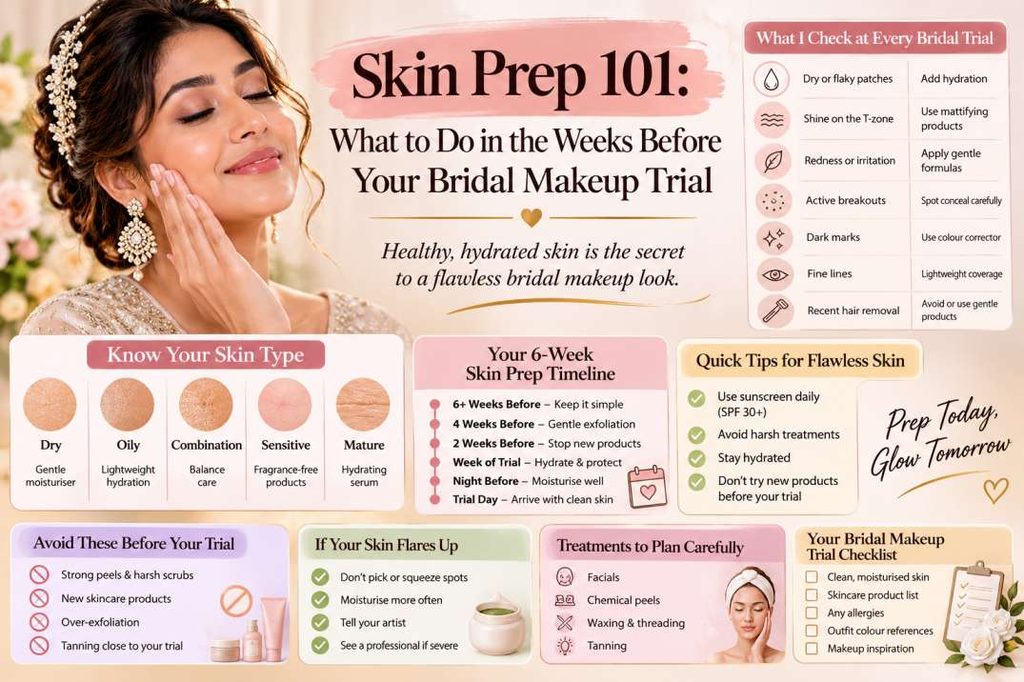
Before any makeup goes on, I run through a short skin check. Knowing what your artist looks for helps you prepare for it.
| What I Check | What It Tells Me | How I Adjust the Makeup |
|---|---|---|
| Dry or flaky patches | The skin barrier needs moisture | Hydrating primer, thinner foundation layers |
| Shine on the T-zone | Oil will break through later in the day | Mattifying primer and targeted powder only where needed |
| Redness or pink areas | Recent irritation or sensitivity | Colour correction and gentle, fragrance-free products |
| Active breakouts | Inflamed spots need careful coverage | Precise spot concealing, no heavy layering |
| Dark marks from old spots | Pigmentation that needs evening out | Peach or orange correction before foundation |
| Fine lines under the eyes | Concealer may crease | Sheer concealer and very light setting |
| Recent hair removal | Skin may sting or react | Avoid the area or use the gentlest products |
The calmer and more balanced your skin is, the less correcting I need to do. Less correcting means a lighter, more natural base that lasts longer and photographs better.
Your trial is a rehearsal. The look we design there is the look I recreate on your wedding day. If your skin is irritated or dehydrated at the trial, I plan around that. If it then changes, the plan may no longer fit.
Steady skin prep before bridal makeup keeps your skin consistent from the trial to the wedding, and that consistency makes the final look predictable.
Here is a pattern I see often. One bride keeps a simple routine for several weeks and arrives with calm, hydrated skin. She needs only a thin layer of foundation, and her base looks almost bare in photos. Another bride starts a strong new exfoliating serum shortly before her trial. Her cheeks feel tight and look slightly pink, so I add extra hydration and colour correction. Both brides look beautiful. Only one gets the light, skin-like finish she originally wanted.
Many of my brides have South Asian skin, and one point matters a lot here. Medium and deeper skin tones are more likely to develop dark marks, known as post-inflammatory hyperpigmentation, after irritation, picking or over-exfoliation. These marks can take weeks or months to fade.
This means aggressive treatments carry a bigger risk close to your wedding. A harsh scrub, a strong peel or a squeezed spot can leave a mark that outlasts the trial and shows on the wedding day. Gentle, consistent care is the safest route. Daily sunscreen also matters, because sun exposure can darken existing marks.
| Skin Type | What You Notice | What to Focus On |
|---|---|---|
| Dry | Tightness, flaking, dull texture | Gentle non-foaming cleanser, richer moisturiser |
| Oily | Shine by midday, visible pores | Lightweight gel moisturiser, avoid harsh stripping washes |
| Combination | Oily T-zone, drier cheeks | Lighter products on the T-zone, more moisture on the cheeks |
| Sensitive | Stinging, redness, quick reactions | Fragrance-free basics, patch test anything new |
| Mature | Fine lines, less bounce | Hydrating serum, gentle exfoliation, careful eye care |
One point surprises many brides: oily skin still needs moisturiser. Dehydrated skin can look shinier, and that extra oil breaks makeup down faster.
If your trial is close, start at whatever stage you are at. Calm, hydrated skin matters far more than a perfect routine.
| Stage | Focus |
|---|---|
| Six or more weeks before | Settle into a simple routine; introduce any new products now |
| Four weeks before | Gentle exfoliation once or twice a week; plan hair removal and brows |
| Two weeks before | Stop adding new products; keep everything consistent |
| Week of the trial | Hydrate, protect from sun and wind, avoid harsh treatments |
| Night before | Cleanse gently, moisturise well, apply lip balm |
| Trial day | Arrive with clean, moisturised skin and no makeup |
Start with three basics: a gentle cleanser, a moisturiser for your skin type and a broad-spectrum sunscreen every morning. Dermatologists commonly recommend at least SPF 30 for daily use.
If you want to try a new product, try it now and patch test it first. Apply a small amount to the inner arm or behind the ear for a day or two, and only use it on your face if there is no reaction.
Gentle exfoliation once or twice a week removes dull, flaky skin so foundation sits smoothly. Choose a mild exfoliant or a soft cloth rather than a gritty scrub. If your skin stings, turns red or feels tight, cut back straight away.
From here, consistency matters more than results. Avoid new serums, masks and “instant glow” products. Your skin should behave the same way at the trial as it will on the wedding day.
Keep moisturising, wear sunscreen and protect your skin from harsh wind and heat. If you use retinol or strong acids and your skin tends to react, many skin professionals suggest pausing them for a few days before an event. If these products were prescribed, ask your doctor before you stop them.
Stress, travel and late nights can trigger a breakout or dry patch at the worst moment. Here is what I tell my brides.
Keep your trial anyway. Seeing how a flare-up is handled is useful practice in case it happens again before the wedding.
Good skin prep is a partnership. Your part is the routine at home. Your artist’s part is safe, hygienic and honest practice. At my trials, and with any professional you book, you should expect the following:
Dry lips make lipstick look patchy, especially matte shades. Use a nourishing balm daily and smooth any flakes gently with a soft cloth.
Leave your brows a little fuller than usual before the trial. I can shape and fill them, but I can’t replace over-plucked hairs.
If your outfit shows your neck, chest or arms, moisturise those areas too. They appear in photos alongside your face.
The same principles apply to every celebration. Calm, hydrated skin makes any special occasion makeup London guests wear look fresher and last longer.
Booking a professional party makeup artist in London for an engagement, mehndi or family celebration before your wedding shows you how your skin responds to professional products. It also gives your artist useful notes for your bridal look.
Photograph your skin weekly. Use the same window light each time. It shows what is working and gives your artist useful context.
Bring a list of your skincare products. A professional makeup artist in London chooses primers and foundations that sit well with your routine, because some combinations can pill or separate.
Protect your sleep. Tiredness shows most under the eyes, and dark circles need more concealer, which is more likely to crease.
High-definition cameras pick up texture, dryness and redness that a mirror can hide. An HD makeup artist London brides book plans the base for the camera as well as the room. Smooth, hydrated skin is what makes thin, camera-friendly layers possible.
Full glam uses more layers, so the skin underneath matters even more. A glam makeup artist London brides choose for dramatic looks can only build a smooth, polished base on calm, hydrated skin.
For a home trial with a freelance makeup artist London brides recommend, set up near a window with natural light. Have a clean towel, water and your outfit colours ready. A good photoshoot makeup artist London couples work with will also check the finished base on camera.
Ready to plan your trial? At Ummi Chowdhury Mua, every trial starts with a skin check, and you leave with written prep advice for the run-up to your wedding.
Great bridal makeup begins weeks before the trial. Simple, consistent skin prep before bridal makeup gives you a smoother base, a natural glow and makeup that lasts.
Keep your routine gentle, introduce new products early and avoid harsh treatments close to your trial. When you meet your professional makeup artist in London, share your routine and any skin concerns openly.
If you are still comparing options after searching for a makeup artist London, ask each artist how they assess skin, how they keep their kit clean and what prep advice they give after the trial.
For engagements, parties and family events, a professional party makeup artist in London from Ummi Chowdhury Mua can help you start your prep early. Book a consultation, and bring your best skin to every celebration.
Start skin prep before bridal makeup at least six weeks before your trial if you can. This gives your skin time to settle into a steady routine and shows how it reacts to any new products. If your trial is closer, focus on gentle cleansing, regular moisturising and daily sunscreen. Avoid anything new or harsh, because calm, hydrated skin matters far more than a last-minute treatment.
A facial can help, but timing matters. Extractions and new products can cause redness or breakouts for a few days afterwards. Book your last facial well before your trial with a therapist who already knows your skin. Never try a new facial or peel close to your trial or wedding, especially if you have a deeper skin tone, because irritation can leave dark marks that take a long time to fade.
If you already use these products comfortably, you can usually continue. Many skin professionals suggest pausing them for a few days before the trial if your skin tends to get dry or sensitive. Don’t start a new active product close to the date. Retinoids can also make skin more fragile during waxing. If your doctor prescribed the product, ask them before you stop or change it.
Don’t pick or squeeze it. That creates an open mark that is much harder to conceal, and on medium or deeper skin tones it can leave a dark mark. Keep the area clean and stick to your usual gentle routine. Tell your artist about the breakout at the start of the trial so they can spot-conceal it carefully. If it is painful, spreading or severely inflamed, speak to a pharmacist or your GP.
A professional makeup artist in London starts with a skin and allergy conversation, then checks for dryness, oil, redness, breakouts, pigmentation and texture. They choose primers, foundation and setting products to suit what they find. Dry skin gets hydrating primer and thinner layers. Oily skin gets mattifying primer and targeted powder. Sensitive skin gets gentle, fragrance-free products. Notes from your trial then guide your wedding-day look.
Please complete the form below, to request a quote, and we’ll be in touch. Or you can call us 07534 814316 and our specialists will provide the necessary help!
Ummi Chowdhury MUA is a professionally trained freelancer specialising in hair and makeup services for grand events and parties. An authorised makeup artist with combined experience, Ummi is all set to establish the perfect dazzling look as per your desire.


