

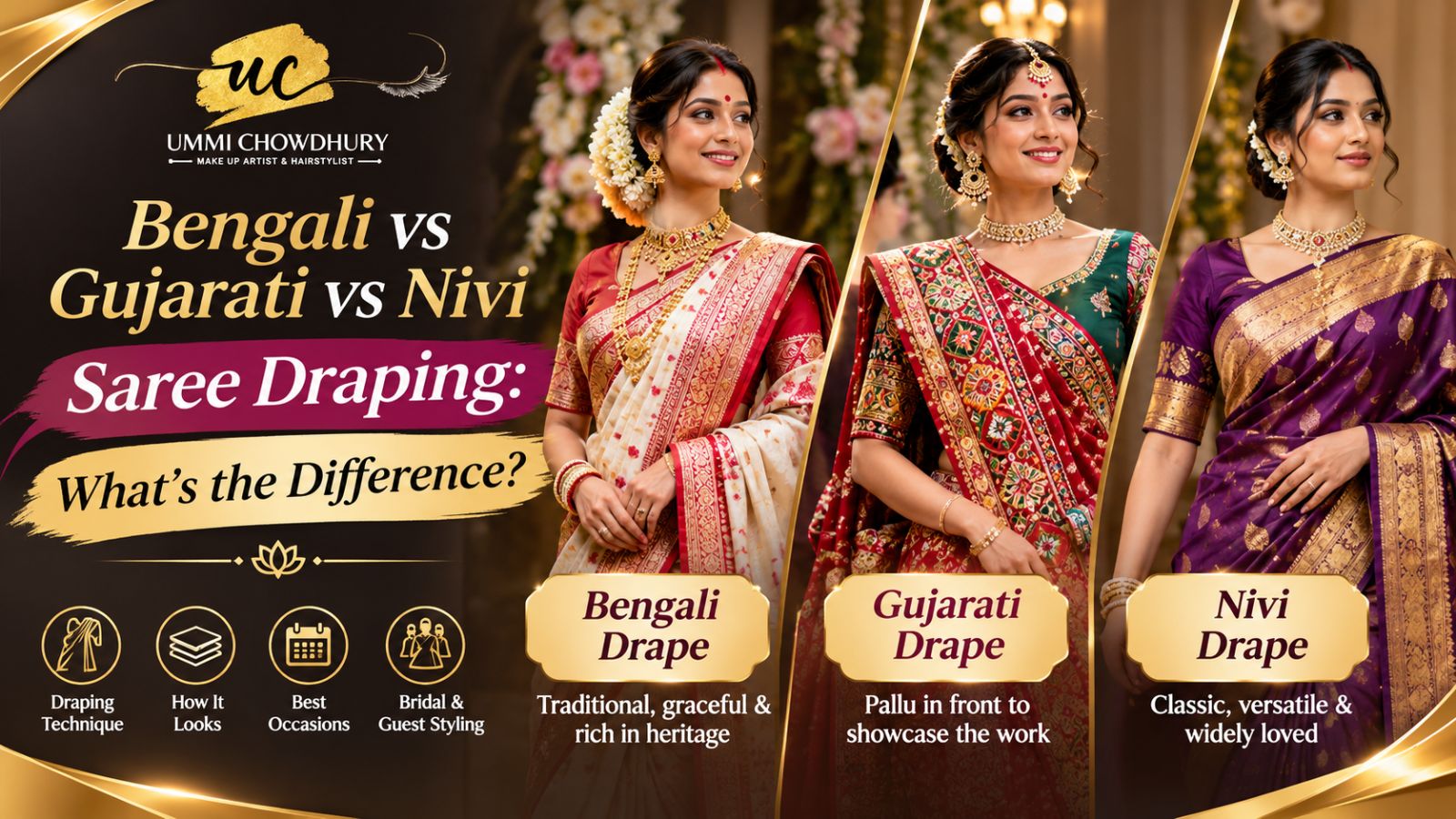
Hand the same saree to three women from three different families, and you may see it worn three different ways. One wraps the pallu over the left shoulder and lets it fall down the back. Another brings it forward over the right shoulder to show off the embroidery. A third skips the front pleats altogether and finishes with the pallu over both shoulders.
None of them is wrong. They are simply wearing different drapes, each with its own history, feel and purpose. For anyone looking into saree draping styling in London, knowing these differences helps you choose a look that suits your saree, your event and your family’s traditions.
This guide explains Bengali vs Gujarati saree draping, and how both compare with the popular Nivi drape. You will learn how each one is wrapped, how it looks and moves, and which occasions it suits best.
It will also help you brief a saree styling and draping service clearly, so you get the drape you actually want rather than the one the draper does by default.
And if you are searching for a saree draping service near me for a wedding, puja or party, the comparisons below show you which questions to ask before you book.
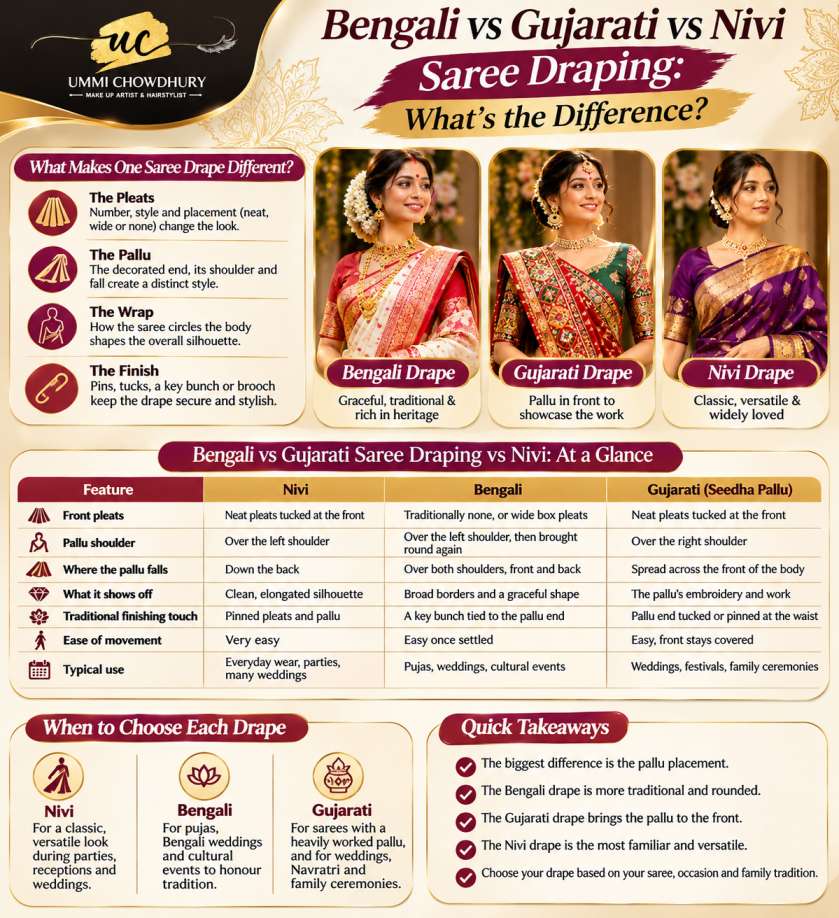
Every drape is built from the same few parts. The differences come from how each part is handled.
| Feature | Nivi | Bengali | Gujarati (Seedha Pallu) |
|---|---|---|---|
| Front pleats | Neat pleats tucked at the front | Traditionally none, or wide box pleats | Neat pleats tucked at the front |
| Pallu shoulder | Over the left shoulder | Over the left shoulder, then brought round again | Over the right shoulder |
| Where the pallu falls | Down the back | Over both shoulders, front and back | Spread across the front of the body |
| What it shows off | Clean, elongated silhouette | Broad borders and a graceful, rounded shape | The pallu’s embroidery and work |
| Traditional finishing touch | Pinned pleats and pallu | A key bunch tied to the pallu end | Pallu end tucked or pinned at the waist |
| Ease of movement | Very easy | Easy once settled | Easy, front stays covered |
| Typical use | Everyday wear, parties, many weddings | Pujas, weddings, cultural events | Weddings, festivals, family ceremonies |
The Bengali vs Gujarati saree draping contrast is the sharpest of the three. The Bengali drape lets the pallu travel around the body, while the Gujarati drape brings it straight to the front so the most decorated part of the saree is the first thing people see.
The saree is tucked into the petticoat at the waist and wrapped once around the body. A set of even pleats is gathered at the front and tucked in, usually facing left. The pallu is then pleated or left open and taken over the left shoulder, falling down the back.
The Nivi drape creates a long, clean line from shoulder to hem. It is the style most people picture when they think of a saree, and it suits almost every fabric, from light georgette to heavy silk. It allows easy movement, which makes it a reliable choice for long events and dancing.
Choose the Nivi drape when you want a classic, versatile look that works for parties, receptions and many wedding ceremonies. It also adapts well to modern variations, such as a pinned, pleated pallu for a neat finish or an open pallu for a softer, flowing effect.
The traditional Bengali drape, often called the athpoure style, is wrapped around the body without the usual front pleats, or with a few wide box pleats instead. The pallu goes over the left shoulder, comes back round under the right arm and is brought over the left shoulder again. Traditionally, a decorative key bunch is tied to the end of the pallu and rests on the shoulder.
The Bengali drape gives a rounded, graceful silhouette that shows off broad borders beautifully. It works especially well with sarees that have strong contrast borders, such as the red-and-white styles often worn at pujas, and with rich silks such as Banarasi for weddings.
Choose the Bengali drape for Durga Puja, Bengali weddings, cultural events and any occasion where you want to honour Bengali heritage. Many Bengali brides wear it with a red silk saree, gold jewellery and a mukut for a classic bridal look.
The Gujarati drape, also called the seedha pallu style, begins much like the Nivi drape, with pleats tucked at the front. The difference is the pallu. It is taken from the back over the right shoulder and spread across the front of the body, with the end tucked or pinned at the left side of the waist.
This drape puts the pallu on display, so embroidery, bandhani work and zari borders are the first thing people see. It feels secure and modest, with the front of the body covered by the pallu.
Choose the Gujarati drape when your saree has a heavily worked pallu you want to showcase. Gujarati brides traditionally wear sarees such as the Panetar or Gharchola in this style, and it is popular for weddings, Navratri and family ceremonies.
The right drape depends on your saree as much as your event.
| Saree or Occasion | Drapes That Work Well | Why |
|---|---|---|
| Light georgette or chiffon | Nivi | Falls softly and moves easily |
| Heavy Banarasi or Kanjeevaram silk | Nivi, Bengali | Holds structured pleats and borders |
| Heavily embroidered pallu | Gujarati | Puts the work on display at the front |
| Broad contrast border | Bengali | Shows the border around the whole body |
| Long evening with dancing | Nivi | Easiest to move in |
| Cultural or religious ceremony | The drape your family traditionally wears | Respects custom and looks right in family photos |
Bridal sarees are heavier, more embellished and worn for longer than everyday sarees. Bridal saree draping London brides book should be secure enough for rituals, hugs and photos while still sitting neatly over jewellery. A good draper will balance the pleats and pallu so the weight of the fabric doesn’t pull the blouse or shoulder out of place.
For brides who change between events, a wedding saree draping service London families book can switch you from a traditional drape for the ceremony to a softer Nivi drape for the reception without a rushed redo.
Guests often struggle most with draping, especially if they rarely wear a saree. A saree drape for guests London families book for a wedding party means mothers, sisters and friends all look neat and coordinated. It also saves the bride from relatives trying to pin each other’s pallus minutes before the photos.
A pre-drape saree service London customers use involves stitching or setting the pleats and pallu in advance, so the saree can be worn almost like a ready garment. This suits guests who want a quick, secure drape, and anyone attending several events in a row.
A saree pinning service London brides rely on focuses on hidden, secure pins at the pleats, the shoulder and the waist. Good pinning keeps the drape in place without visible safety pins or snagging delicate fabric.
The drape, jewellery, hair and makeup all work together. A Gujarati drape draws attention to the front, so a lighter necklace may balance it. A Bengali drape frames the shoulders, so earrings and hair become more visible. Good saree styling London brides plan for considers all of this together.
Bring your saree, blouse, petticoat, shoes and main jewellery to any trial or fitting. Wear the shoes you will wear on the day, because heel height changes where the hem should fall.
When searching for saree draping near me, look for a south asian saree draping specialist who can show real photos of all three drapes, not just the Nivi style. Ask whether they know your family’s traditional drape and how they secure heavy bridal sarees. A good saree draping service near me will also ask about your events, so the drape suits your whole day.
For weddings with several functions, plan a different drape for each one. A traditional Bengali or Gujarati drape suits the ceremony, while a fluid Nivi drape works well for a reception. Ask your draper whether they can change your drape between events, so you are not rewrapping a heavy saree yourself.
The Bengali vs Gujarati saree draping choice, and the Nivi option beside them, comes down to three questions: what your saree is made to show off, what your event calls for and what your family tradition expects.
Working with a skilled saree styling and draping service means your drape is secure, flattering and true to its tradition.
If you are planning saree draping styling in London for a wedding, puja or party, start by deciding which part of your saree you want people to notice first. The right drape follows from there.
At Ummi Chowdhury Mua, we drape sarees as part of complete bridal and event looks, alongside hair and makeup. If you are looking for a saree draping service near me that understands South Asian traditions, book a consultation and bring your saree with you.
The main difference in Bengali vs Gujarati saree draping is where the pallu goes. In the Bengali drape, the pallu crosses the left shoulder, wraps back round and crosses the left shoulder again, often with a key bunch tied to the end, and there are usually no front pleats. In the Gujarati drape, the pleats sit at the front and the pallu comes over the right shoulder to spread across the front, showing off its embroidery.
The Nivi drape is usually easiest for first-time wearers. It is the most familiar style, allows comfortable walking and sitting, and suits almost every fabric. With neat front pleats and a pinned pallu over the left shoulder, it stays secure through long events. If you want a traditional Bengali or Gujarati drape, ask a professional to drape it for you and practise moving in it before the day.
You can, but it works best with sarees that have a decorated pallu, because the drape puts the pallu across the front of the body. Plain pallus can look unbalanced in this style. Heavily embroidered, bandhani and zari-bordered sarees look especially striking. Very slippery, lightweight fabrics may need more careful pinning at the shoulder and waist to keep the spread pallu neat throughout the event.
Bring your saree, a well-fitted blouse, a matching petticoat, the shoes you will wear and your main jewellery. Shoes matter because heel height decides where the hem should sit. Jewellery matters because necklaces and earrings affect how the pallu is placed. A good saree styling and draping service will also ask about your event, so the drape suits how long you will wear it and how much you will move.
When searching for a saree draping service near me, look for someone who can show real photos of several drapes, including Bengali, Gujarati and Nivi styles. Ask how they secure heavy bridal sarees, whether they use hidden pins and whether they can drape guests too. For saree draping styling in London across several wedding events, check that they can switch drapes between functions so every look stays neat and comfortable.
Please complete the form below, to request a quote, and we’ll be in touch. Or you can call us 07534 814316 and our specialists will provide the necessary help!
Ummi Chowdhury MUA is a professionally trained freelancer specialising in hair and makeup services for grand events and parties. An authorised makeup artist with combined experience, Ummi is all set to establish the perfect dazzling look as per your desire.


