
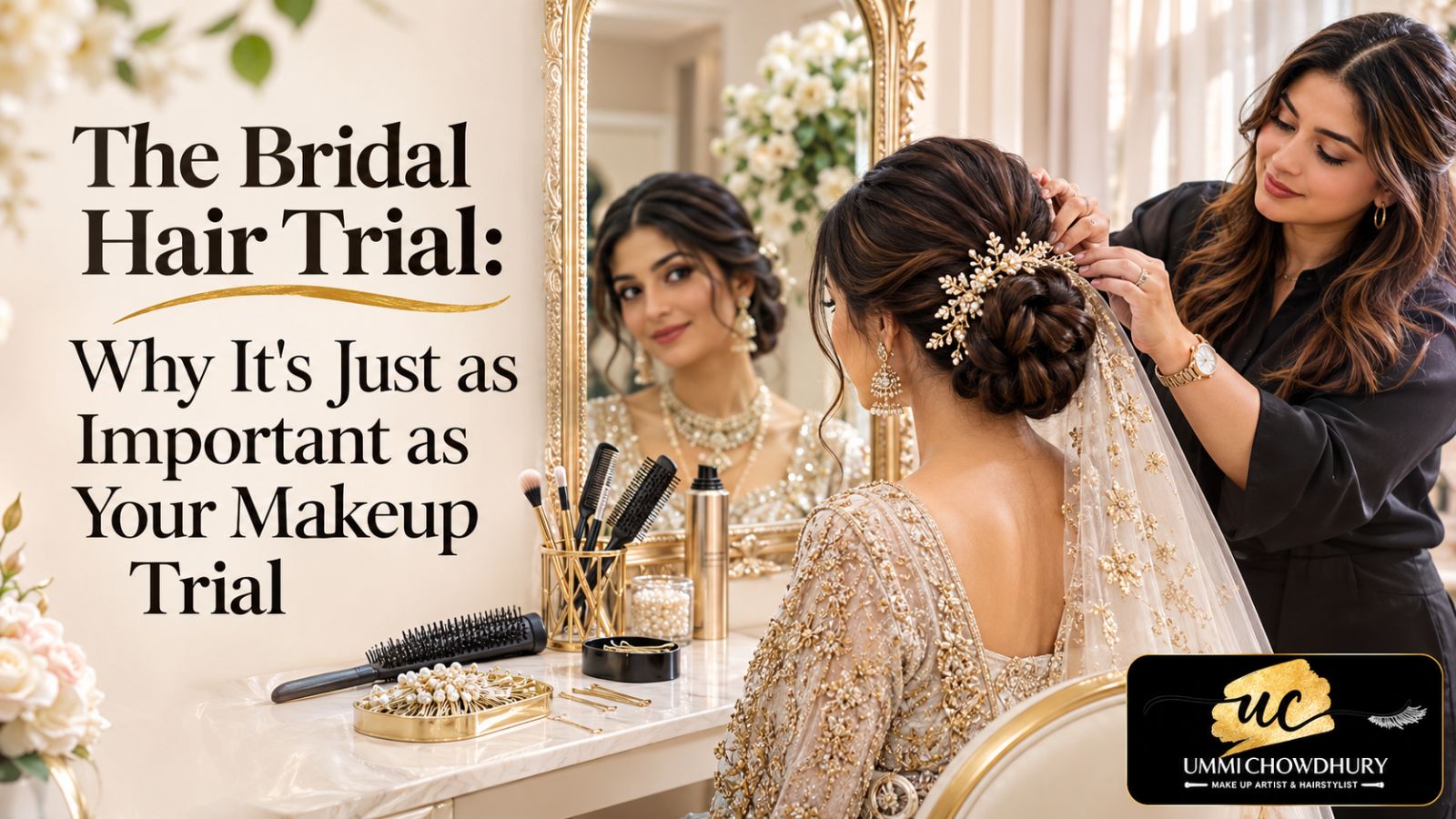
Your wedding day is one of those occasions when every detail contributes to how you look and feel. From the wedding outfit and jewellery to your makeup and hairstyle, each element works together to create your overall bridal appearance. While many brides carefully arrange a makeup trial before the wedding, bridal hairstyling sometimes receives less attention during the preparation process.
This is where understanding bridal hair trial importance becomes essential.
A hairstyle that looks beautiful in an inspiration photograph may not necessarily work with your hair texture, length, face shape, outfit or wedding accessories. Even a hairstyle that appears simple can require careful preparation, product selection and styling techniques to achieve the desired result.
For brides working with a hair stylist london, a dedicated hair trial provides an opportunity to explore different looks, communicate personal preferences and identify potential challenges before the wedding day.
At Ummi Chowdhury Mua, bridal beauty is about creating a look that reflects the bride’s personality, complements her outfit and feels comfortable throughout her celebrations. A bridal hair trial helps make that preparation more thoughtful, organised and personalised.
Let’s explore why a bridal hair trial deserves just as much attention as your makeup trial and how it can make a meaningful difference to your wedding preparation.
A bridal hair trial is a preliminary hairstyling session where a bride explores and tests her preferred wedding hairstyle before the actual wedding day.
Unlike everyday hairstyling, bridal hairstyling involves several considerations. The hairstyle needs to complement the wedding outfit, work with the bride’s natural hair characteristics and accommodate accessories such as veils, hairpins, floral decorations and traditional jewellery.
A trial allows these details to be considered together rather than making important decisions on the wedding morning.
For example, a bride may initially prefer a loose, romantic hairstyle inspired by an online photograph. However, during the trial, she might discover that a structured updo complements her neckline and jewellery more effectively.
Similarly, a bride planning to wear traditional attire may want a hairstyle that accommodates a dupatta, maang tikka or decorative hair accessories.
A trial makes it possible to explore these details before the final styling appointment.
It also gives the hairstylist an opportunity to understand the bride’s expectations, assess the hair’s natural behaviour and recommend suitable styling approaches.
Understanding bridal hair trial importance means recognising that a wedding hairstyle involves much more than choosing an attractive design.
It is about preparation, compatibility, communication and confidence.
Here are some important reasons every bride should consider arranging a dedicated hairstyling trial.
Your wedding outfit plays an important role in determining which hairstyle will look balanced and appropriate.
A heavily embroidered traditional outfit, for instance, may work beautifully with an elegant bun that allows the neckline, earrings and other jewellery to remain visible.
On the other hand, a contemporary wedding gown might complement soft waves, a textured updo or a half-up hairstyle.
During a trial, the hairstylist can consider:
Bringing photographs of your wedding outfit can make this discussion more productive.
The objective is not simply to recreate a hairstyle from an inspiration image. It is to find a look that works naturally with the complete bridal appearance.
Every bride has different hair characteristics.
Some have naturally straight hair that struggles to maintain curls. Others have thick, textured hair that requires careful sectioning and preparation. Fine hair may need additional structure to support a voluminous bun or elaborate updo.
A photograph cannot reveal these practical considerations.
During the trial, an experienced hairstylist can assess:
This assessment helps determine whether the selected hairstyle is achievable with the bride’s existing hair and what preparation may be necessary.
For instance, a bride with fine hair may love a voluminous bridal bun. Rather than dismissing the idea, the hairstylist can explore suitable techniques and discuss whether additional hair support would help achieve the desired appearance.
Wedding mornings can involve several preparations happening simultaneously.
There may be photographers, family members, outfit arrangements, makeup appointments and other important activities to coordinate.
Making major hairstyle decisions during this already busy period can create unnecessary pressure.
A completed hair trial provides clarity about the preferred hairstyle, styling direction and accessories.
The bride has already seen how the look appears and has had the opportunity to communicate any adjustments.
This does not mean that every wedding-day detail can be predicted perfectly. Hair can respond differently to environmental conditions and other factors. However, advance preparation reduces the number of decisions that need to be made during the final styling session.
A wedding hairstyle should look beautiful, but comfort matters just as much.
A hairstyle that feels excessively tight, heavy or restrictive may become uncomfortable during a long celebration.
During the trial, pay attention to:
This is particularly important for brides choosing elaborate buns, intricate braids or hairstyles involving multiple accessories.
A good bridal hairstyle should support the occasion rather than distract the bride from enjoying it.
Hair accessories can completely change the appearance of a bridal hairstyle.
A delicate hairpin may add subtle detail to a simple bun, while a decorative comb or traditional ornament may become a central feature of the overall look.
However, not every accessory works with every hairstyle.
For example, a bride wearing a heavy dupatta may need a hairstyle that provides suitable support for its placement. Another bride wearing a veil might prefer a hairstyle that allows the veil to be secured without disrupting the overall design.
A hair trial allows the stylist to consider these practical requirements and explore different accessory arrangements.
Searching for a hair stylist near me is often one of the first steps brides take when planning their wedding beauty arrangements.
However, choosing someone for bridal hairstyling requires more consideration than simply finding someone who can create attractive hairstyles.
Bridal hairstyling involves understanding different hair textures, styling techniques, accessories and the relationship between hair, makeup and wedding attire.
When evaluating a hairstylist, consider the following factors.
Look for examples of bridal hairstyles that demonstrate versatility and attention to detail.
Consider whether the stylist has experience with the type of look you prefer, whether that involves traditional bridal buns, soft curls, textured updos or contemporary hairstyles.
A useful consultation should involve more than showing a photograph.
Explain what you like about the hairstyle, what you would prefer to avoid and how you want your overall appearance to feel.
For example, you might like the volume of an inspiration hairstyle but prefer a softer finish around the face.
These details help the stylist understand your expectations.
An effective bridal hairstyling process should consider the individual bride rather than applying the same hairstyle to everyone.
Your hair texture, outfit, accessories, personal preferences and wedding requirements should all influence the final styling decision.
At Ummi Chowdhury Mua, the focus is on understanding the bride’s desired appearance and exploring styling choices that complement her individual bridal look.
A bridal hairstyling trial should be a collaborative process.
The bride shares her ideas, while the hairstylist evaluates the practical requirements and suggests suitable options.
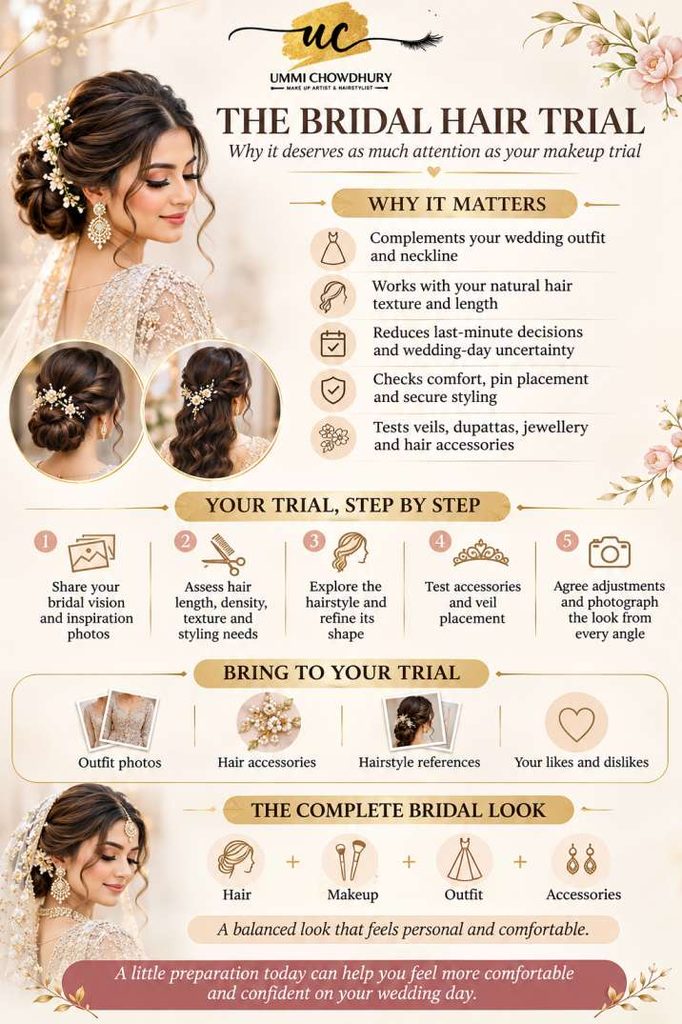
Although every appointment can differ, the following stages provide a useful understanding of what a professional trial may involve.
The process begins with understanding the bride’s vision.
You can bring reference photographs, wedding outfit images and examples of hairstyles that appeal to you.
Discuss whether you prefer:
It is equally useful to explain what you do not like.
For example, you may prefer a polished hairstyle but dislike excessive volume around the crown.
Clear communication helps establish the styling direction.
The hairstylist considers the natural hair texture, length, density and styling requirements.
This is important because two brides requesting the same hairstyle may need different techniques to achieve a similar result.
A hairstyle may require additional preparation, careful sectioning or suitable extensions depending on the bride’s natural hair.
Discussing these requirements during the trial helps avoid unrealistic expectations.
The preferred hairstyle is then created or explored to assess how it looks.
The bride can evaluate the shape, volume, texture and overall finish.
Small adjustments may be necessary.
For example, a bun may look more balanced when positioned slightly lower, or soft face-framing sections may create a more flattering appearance.
These refinements are part of the purpose of the trial.
Once the hairstyle takes shape, consider how it works with the intended accessories.
If possible, bring the actual hair accessories rather than relying entirely on photographs.
This allows the stylist to assess their placement and how they interact with the hairstyle.
At the end of the session, discuss what you liked and what you would change.
Take photographs from different angles, including the front, sides and back.
These photographs provide a useful reference for the final styling appointment and help communicate your preferred result.
A wedding hairstyle should feel connected to the overall atmosphere of the celebration.
A formal traditional wedding may call for a different styling approach from an intimate outdoor ceremony or a contemporary celebration.
Working with a wedding hair stylist London can involve exploring different hairstyle directions based on the wedding’s visual style and the bride’s personal preferences.
Traditional hairstyles often feature structured buns, carefully arranged braids and decorative accessories.
These styles can complement traditional bridal outfits and jewellery.
For brides incorporating cultural elements into their wedding appearance, the positioning of accessories and the arrangement of the hair can be particularly important.
Soft waves, loose curls and delicate face-framing sections create a more relaxed appearance.
These styles can work well with flowing outfits, softer makeup choices and contemporary bridal themes.
The hairstylist should consider whether the natural hair texture can support the selected finish.
Some brides prefer understated hairstyles that allow their outfit, makeup or jewellery to become the main focus.
A sleek bun, simple ponytail or understated half-up hairstyle may suit this preference.
The trial helps determine whether the proportions and finish complement the bride’s overall appearance.
Hair and makeup are often planned separately, but they contribute to the same overall bridal appearance.
A beautifully styled hairstyle may look disconnected if it does not complement the makeup, outfit and accessories.
This is why coordinating the two elements is important.
When consulting a hair and makeup stylist london, consider the following:
If the makeup features dramatic eyes or a bold lip, a softer hairstyle may create a balanced appearance.
Alternatively, a simple makeup look may work beautifully with a more detailed hairstyle.
There is no single formula. The objective is to ensure that the different elements complement rather than compete with one another.
The way hair sits around the face can influence how makeup is presented.
For example, loose strands around the face may create a softer appearance, while a sleek updo can highlight facial features and statement earrings.
The trial provides an opportunity to explore these preferences.
Consider the overall effect you want to achieve.
A natural bridal appearance may suit soft waves and subtle makeup, while a more traditional bridal look may involve a structured hairstyle and more defined makeup.
At Ummi Chowdhury Mua, bringing attention to the relationship between hairstyling and makeup helps create a more considered bridal beauty direction.
Many brides prefer to prepare at home, in a bridal suite or at another selected wedding preparation location.
A mobile hair stylist London arrangement can offer convenience, particularly when the bride wants to complete her beauty preparation in a familiar setting.
However, on-location hairstyling involves practical considerations that should be discussed in advance.
Hairstyling requires enough room to move around the bride comfortably.
A suitable mirror, chair, electrical access and a well-organised preparation area can make the process easier.
Good lighting helps the stylist assess the hairstyle’s finish, texture and overall appearance.
If possible, choose a preparation space with adequate lighting.
Clarify the preparation location and any practical requirements with the stylist beforehand.
This is especially useful when several people will be getting ready in the same space.
Planning these details helps create a more organised preparation experience.
A luxurious bridal hairstyle is not necessarily the most complicated or elaborate one.
In many cases, it is the attention to detail, personalised styling and overall finish that make the difference.
A luxury bridal hair stylist london approach should focus on understanding the bride’s preferences and creating a hairstyle that feels appropriate for her wedding appearance.
Important considerations include:
The purpose is to create a bridal hairstyle that feels personal, considered and comfortable.
Asian bridal hairstyling often involves a combination of traditional styling elements, decorative accessories and individual preferences.
Different cultural traditions have their own hairstyling approaches, and each bride may have a different vision of how she wants to incorporate these elements.
For brides exploring asian bridal hairstyles London, a trial can be particularly useful because it allows the stylist to consider the outfit, jewellery, hair accessories and cultural styling preferences together.
A traditional bun can provide a structured base for decorative accessories and traditional bridal jewellery.
Depending on the bride’s preference, the bun may be sleek, textured or enhanced with additional volume.
Its positioning should also accommodate the placement of the dupatta or other head accessories.
Braids can introduce texture and decorative detail to traditional bridal looks.
They may be incorporated into an updo or styled as part of a more elaborate arrangement.
The trial helps determine how the braid works with the bride’s hair length and preferred accessories.
Some brides prefer a combination of traditional and contemporary styling.
For example, a traditional outfit may be paired with a softer bun or loose face-framing sections.
The most important consideration is that the hairstyle should reflect the bride’s preferences rather than follow a fixed expectation.
Updos remain a popular bridal styling choice because they can create a structured appearance and provide a suitable foundation for different accessories.
However, an updo is not automatically the best choice for every bride.
A hair updo specialist london approach involves considering the bride’s hair characteristics, outfit, accessories and preferred styling finish.
Low buns can create an elegant and understated appearance.
They may be particularly suitable when the bride wants to highlight statement earrings or traditional jewellery.
High buns can create additional height and a more structured silhouette.
The stylist should consider the bride’s preferences and the overall balance of the hairstyle.
Textured updos combine structure with softer details.
They can incorporate curls, twists and carefully arranged sections to create a more relaxed finish.
A hair trial helps determine which updo style works best with the bride’s hair and overall bridal look.
Traditional bridal hairstyling often includes details that have personal, cultural or family significance.
These may involve specific accessories, traditional jewellery, decorative flowers or particular ways of arranging the hair.
For brides exploring traditional bridal hairstyling London, communicating these preferences during the consultation is important.
For example, a bride may want a hairstyle that accommodates a maang tikka while keeping the front section of the hair neat.
Another bride may want her bun arranged to support traditional floral decorations.
These requirements should be discussed before the final wedding-day appointment.
It is also important to remember that traditional styling is not identical for every bride. Personal preferences, family traditions and individual cultural practices can all influence the final appearance.
A thoughtful hairstyling consultation respects these differences and allows the bride to make informed choices.
Even with careful preparation, some brides overlook small details that can affect the usefulness of their hair trial.
Avoiding the following mistakes can make the experience more productive.
An inspiration photograph may show a hairstyle created on hair with completely different thickness, length or texture.
Rather than expecting an exact reproduction, discuss how the stylist can adapt the look to your natural hair.
Testing a hairstyle without the intended accessories may give an incomplete picture.
Bring your veil, hairpins, decorative combs or other important accessories whenever possible.
Exploring different ideas is useful, but repeatedly changing your preferred direction without a clear reason can make the decision more difficult.
Start with a few reference styles and identify the features you like about each one.
A hairstyle may photograph beautifully but feel uncomfortable when worn.
Pay attention to tension, pin placement and accessory weight during the trial.
Your hairstylist cannot automatically know which details matter most to you.
Explain whether you prefer a sleek finish, additional volume, loose sections or a particular bun position.
Honest feedback helps improve the final result.
The wedding morning is not the ideal time to experiment with an entirely new hairstyle.
Use the trial to establish the preferred styling direction and discuss any adjustments beforehand.
A successful trial depends on preparation from both the bride and the hairstylist.
The following suggestions can help you make the most of the appointment.
Choose a few photographs that reflect your preferred hairstyle. Include front, side and back views whenever possible.
The outfit’s neckline, sleeves and overall design can influence the hairstyle selection.
Bring the actual accessories if available. This helps the stylist consider their weight, positioning and compatibility with the hairstyle.
Explain how your hair normally behaves, including whether it holds curls, becomes frizzy or loses volume.
Photographs from different angles help you evaluate the hairstyle and provide a reference for future discussions.
If something does not feel right, explain it clearly. A small adjustment to the volume, texture or positioning may make a meaningful difference.
Trends and inspiration photographs can provide ideas, but your wedding hairstyle should reflect your own preferences.
Bridal hairstyling should begin with understanding the individual bride.
At Ummi Chowdhury Mua, the focus is on creating a considered bridal beauty look that reflects personal style, complements the wedding outfit and takes the practical requirements of hairstyling into account.
A bridal hair trial provides an opportunity to discuss the bride’s preferred appearance, explore suitable hairstyle options and consider important details such as hair texture, accessories and overall styling balance.
Whether the preference is for a traditional bridal bun, a softly textured updo, romantic waves or a contemporary hairstyle, the aim is to understand what works for the individual bride.
This personalised approach also recognises that bridal beauty is not about following every trend. It is about finding a look that feels authentic, appropriate and comfortable.
Careful communication and advance preparation help establish a clearer direction for the final bridal styling.
Your wedding hairstyle deserves the same thoughtful preparation as your makeup, outfit and accessories.
Understanding bridal hair trial importance helps you make informed decisions, explore suitable styling options and address potential concerns before the wedding day.
A trial is not simply about checking whether a hairstyle looks attractive. It is an opportunity to assess comfort, understand your hair’s natural characteristics, coordinate accessories and communicate your expectations.
For brides looking for a hair stylist london, choosing a personalised approach can make the entire bridal hairstyling process more considered and organised.
At Ummi Chowdhury Mua, the emphasis is on understanding each bride’s vision and exploring a hairstyle that complements her individual appearance.
Your wedding look should feel like you. With thoughtful planning, clear communication and a carefully considered bridal hair trial, you can approach your wedding preparation with greater confidence and enjoy a hairstyle that reflects your personal style.
A bridal hair trial is important because it allows the bride and hairstylist to evaluate the preferred hairstyle before the wedding day.
It helps identify whether the hairstyle works with the bride’s natural hair texture, length, wedding outfit and accessories. It also provides an opportunity to make adjustments to volume, positioning, texture and finishing details.
Most importantly, it reduces uncertainty by allowing the bride to see and discuss the proposed look before the final styling appointment.
Ideally, bring photographs of your wedding outfit, preferred hairstyles and the accessories you intend to wear.
Important items may include:
These items help the hairstylist understand the complete bridal appearance and make more informed styling recommendations.
An inspiration photograph is a useful starting point, but an exact recreation may not always be possible.
Differences in hair length, thickness, texture, density and accessories can influence the final result.
An experienced hairstylist can assess the reference image and explain which elements can be adapted to suit your natural hair.
The aim should be to achieve a similar overall effect while creating a hairstyle that works with your individual characteristics.
Yes, even if you have already selected your preferred hairstyle, a trial can be valuable.
Knowing what you want does not necessarily mean the hairstyle will work exactly as expected with your hair texture, outfit or accessories.
A trial allows you to evaluate the actual styling approach, check comfort and make adjustments before the wedding.
It also provides an opportunity to communicate specific preferences that might not be obvious from an inspiration photograph.
Ideally, your bridal hair and makeup planning should complement one another.
Although both trials do not necessarily need to happen during the same appointment, coordinating their overall styling direction can help create a balanced appearance.
For example, if you prefer dramatic eye makeup, you may want to explore a hairstyle that complements rather than competes with that detail.
Similarly, a soft makeup look may work beautifully with romantic waves or an understated updo.
The important thing is to consider your hairstyle, makeup, outfit and accessories as parts of one complete bridal look.
Please complete the form below, to request a quote, and we’ll be in touch. Or you can call us 07534 814316 and our specialists will provide the necessary help!
Ummi Chowdhury MUA is a professionally trained freelancer specialising in hair and makeup services for grand events and parties. An authorised makeup artist with combined experience, Ummi is all set to establish the perfect dazzling look as per your desire.


