

Your wedding makeup should feel like you, only with the extra confidence that comes from knowing every detail has been thoughtfully planned. You might imagine soft, glowing skin, beautifully defined eyes and a natural lip colour. Or perhaps you prefer a more glamorous look with fuller coverage, dramatic eye makeup and a statement lip. Whatever your vision, communicating it clearly to your makeup artist is an important part of creating a bridal look you will feel comfortable wearing.
This is where a Bridal Makeup Consultation Guide becomes useful. A consultation is not simply a conversation about lipstick shades or foundation. It is an opportunity to discuss your personal style, wedding aesthetic, complexion preferences, outfit details and the overall feeling you want your makeup to create.
For brides searching for a makeup artist London, understanding how to prepare for this discussion can make the experience more productive. It also helps your makeup artist understand what you like, what you dislike and which details matter most to you.
At Ummi Chowdhury Mua, the aim is to make bridal beauty feel personal rather than dictated by trends. A thoughtful consultation gives both the bride and the makeup artist a clearer understanding of the desired result, helping them work towards a wedding look that complements the individual rather than changing their appearance completely.
Every bride has a different idea of her perfect wedding makeup. Some want a fresh, understated finish, while others prefer a more defined and polished appearance. Even when two brides choose similar inspiration images, their final looks may need to be different because of their skin type, features, outfit, personal preferences and wedding setting.
A bridal consultation helps bring these details together before the makeup application.
It gives you the opportunity to:
Without this conversation, a makeup artist may understand your request differently from how you intended it. For example, when a bride says she wants natural makeup, she might mean lightweight foundation and soft colours. Her makeup artist might interpret the same phrase as a polished look with defined eyes and a more noticeable base.
Neither interpretation is necessarily wrong. The important thing is to establish what natural means to you.
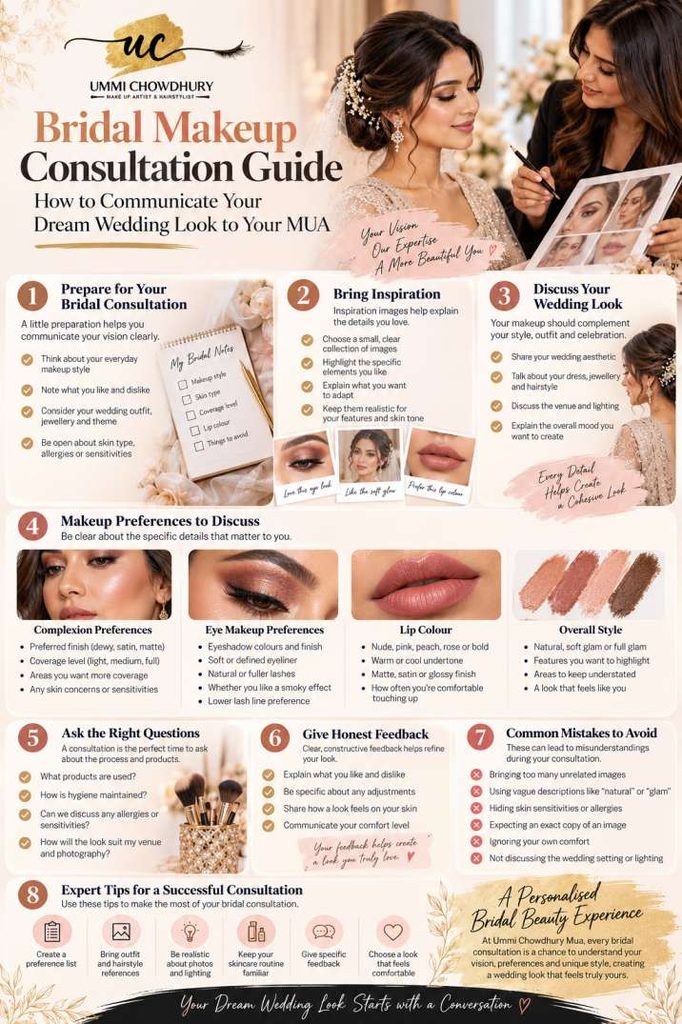
A little preparation can make your consultation more useful. You do not need to arrive with every detail decided, but having a general idea of your preferences will help you explain your vision.
Start by considering the makeup you normally enjoy wearing.
Do you prefer a minimal routine, or do you regularly wear foundation, eyeliner and lipstick? Are you comfortable with false lashes? Do you like a matte finish, or do you prefer a natural glow?
Your everyday habits provide helpful information about your comfort level.
For example, a bride who rarely wears eye makeup may feel uncomfortable with a very dark, dramatic look. Another bride who regularly wears defined eyeliner may want her wedding makeup to have a similar feature.
You can explain:
You do not need professional beauty terminology. Simple descriptions are often more useful than complicated makeup terms.
Images can help you communicate details that are difficult to explain in words. However, choosing inspiration images carefully is important.
Save a small collection of photographs that show the kind of bridal makeup you like. Look for examples that reflect your preferred foundation finish, eye makeup, lip colour and overall appearance.
When sharing inspiration images, explain exactly what attracts you to each one.
For example:
This distinction helps your makeup artist understand the individual elements behind your inspiration.
Remember that photographs can be affected by lighting, filters, editing and camera settings. A makeup look may appear different in person. Your artist can use the images as creative references while adapting the details to your own features and preferences.
Your wedding makeup should complement your personality, outfit and celebration. Instead of focusing on one photograph, think about the complete appearance you want to create.
Your wedding aesthetic can influence the direction of your makeup.
A traditional ceremony, a modern city wedding, an outdoor celebration and an intimate gathering may all have different visual styles. Your makeup does not need to match every decorative detail, but it should feel harmonious with the overall occasion.
Consider sharing information about:
For example, a bride wearing a heavily embellished outfit may prefer a balanced makeup look that allows the outfit to remain prominent. Someone choosing a simple, contemporary outfit may want a more defined eye or lip to add visual interest.
These are possibilities, not fixed rules. The right choice depends on what makes you feel confident.
Every bride has features she particularly likes. You may want to draw attention to your eyes, create a softly defined cheek area or keep your lips as the main feature.
Tell your makeup artist what you want to emphasise and whether there are any areas you prefer to keep understated.
You might say:
Specific descriptions give your artist a clearer starting point than simply asking for a glamorous or beautiful look.
A successful consultation should cover more than the general style. Discussing individual makeup elements helps avoid misunderstandings.
Foundation plays an important role in the overall finish of bridal makeup. However, more coverage does not automatically mean a better result.
Some brides prefer a lightweight base that allows natural skin texture to remain visible. Others feel more comfortable with medium or fuller coverage.
Discuss your complexion preferences, including:
It is also helpful to explain how your skin usually behaves. For instance, if your forehead and nose become oily while your cheeks feel dry, your makeup artist may need to consider how different areas of your face respond to products.
If you have active skin irritation, allergies or a known product sensitivity, communicate this before products are applied. Do not assume that a product labelled as suitable for sensitive skin will automatically work for everyone.
Eye makeup can change the overall character of a bridal look. Soft brown shades, champagne tones, subtle shimmer and defined eyeliner can create very different results.
During your consultation, discuss:
You can also explain what you dislike. If heavy eyeliner makes you feel unlike yourself, say so clearly.
For brides who wear glasses, contact lenses or have sensitive eyes, it is useful to discuss these details as well. Your makeup artist can consider suitable application choices and product compatibility.
Lip colour is another detail worth discussing before the wedding day. A shade that looks attractive in a photograph may not feel comfortable for every bride.
Think about whether you prefer:
If you already have a favourite lipstick shade, mention it. It can provide a helpful reference for your preferred colour family.
Also consider how comfortable you are with lipstick that needs regular attention. Your artist can help you choose a finish that suits your preferences and the overall makeup design.
A consultation should be a two-way discussion. You share your ideas, and your makeup artist uses professional knowledge to help translate them into a suitable look.
You should feel comfortable giving feedback. If a particular colour, texture or makeup technique does not feel right, explain why.
Instead of saying, “I do not like this makeup,” try to identify the specific concern.
For example:
Clear feedback makes it easier to adjust individual elements without losing the parts you already like.
A professional makeup experience should include attention to cleanliness and product handling.
You can ask how brushes and tools are cleaned, how products are applied hygienically and how the artist manages products for clients with known sensitivities.
It is reasonable to discuss whether products are suitable for your skin and whether you can share your own preferred products when appropriate.
If you have allergies, contact lens-related concerns or a history of reactions, provide accurate information. Where necessary, seek advice from a qualified healthcare professional about ingredients or products that may affect you.
Your wedding day may involve several activities, photographs and changes in environment. Your makeup needs to suit the occasion as well as your preferred appearance.
Discuss the setting and conditions with your artist.
For example:
Your artist can explain how product selection and application techniques may help support the desired finish. However, no makeup application can guarantee that makeup will remain completely unchanged in every condition.
It is useful to discuss what you may need for touch-ups and how to handle small changes without disturbing the overall look.
Technical ability matters, but so does communication. A bridal makeup artist should listen carefully, explain their approach and understand that each bride has individual expectations.
When researching a certified makeup artist London, consider more than the label used in a profile or advertisement. Ask about relevant training, professional experience and the type of bridal work they have completed. If certification is important to you, ask which organisation or training programme issued it.
You can also consider the following:
Portfolio consistency: Look at examples of different bridal styles. Do the makeup finishes appear suitable for the looks you prefer?
Skin-tone awareness: Does the artist demonstrate an understanding of different complexions and suitable shade matching?
Communication: Do they listen to your preferences and answer questions clearly?
Hygiene practices: Are tools, brushes and products handled carefully?
Product knowledge: Can they explain why certain textures or finishes may suit your needs?
Adaptability: Are they willing to discuss adjustments rather than insisting on one signature style?
For brides looking for a makeup artist London, these considerations can help identify someone whose approach matches their expectations.
A certificate alone does not guarantee that an artist is the right fit. Likewise, a beautiful portfolio should be considered alongside communication, hygiene and the ability to understand your preferences.
Even a well-planned consultation can become confusing if important details are overlooked.
Saving dozens of photographs may make it harder to identify what you actually want. One image may show dramatic eyes, another may feature a very natural complexion, and a third may have a bold lip.
Choose a manageable collection and explain the specific elements you like in each image.
Words such as “natural”, “glamorous” and “flawless” mean different things to different people.
Explain what those terms mean to you. For example, natural makeup might mean lightweight coverage, softly defined brows and a neutral lip rather than a completely makeup-free appearance.
Do not wait until the wedding day to mention known allergies, sensitivities or previous reactions. Share this information during the consultation so suitable precautions can be discussed.
Your facial features, skin texture and colouring are individual. A makeup look should be adapted rather than copied without consideration.
A photograph is a reference point, not a guarantee of an identical result.
A trend may look beautiful on someone else but still feel unsuitable for you.
If you are not comfortable wearing a particular style, communicate that. Your wedding makeup should support your confidence, not make you feel that you are wearing someone else’s appearance.
A few thoughtful decisions can make your consultation more productive and help you feel confident about the final direction.
Create a short preference list. Write down your favourite finishes, colours and techniques. Include the things you definitely do not want.
Bring relevant outfit details. A photograph of your wedding outfit, jewellery and hairstyle ideas can help your artist understand the overall aesthetic.
Be realistic about photographs. Makeup can appear different under natural light, indoor lighting and camera flash. Discuss how you want your makeup to look both in person and in photographs.
Keep your skin routine familiar. Avoid introducing several unfamiliar skincare products immediately before the wedding. If you are considering a new product or treatment, seek suitable professional advice and allow time to understand how your skin responds.
Give constructive feedback. Explain what feels right and what needs adjustment. Specific comments are more useful than general approval or dissatisfaction.
Prioritise your comfort. You will be wearing your makeup throughout an important personal occasion. Choose textures, colours and techniques that feel suitable for you.
Bridal makeup is personal. The same makeup style will not necessarily suit every bride, even when the wedding outfits or inspiration images are similar.
At Ummi Chowdhury Mua, the focus is on understanding the individual behind the bridal look. A thoughtful conversation about makeup preferences, complexion, eye makeup, lip colour and wedding aesthetic helps establish a clearer creative direction.
The purpose of a personalised beauty consultation is not to follow every trend or reproduce a photograph without considering the bride. It is to understand the details that matter to her and work towards a look that feels balanced, comfortable and appropriate for her celebration.
Whether your preference is understated elegance or more defined bridal glamour, clear communication helps make your expectations easier to understand. It also creates space for professional suggestions while keeping your personal style at the centre of the process.
Your wedding makeup should reflect your personality, complement your outfit and help you feel confident throughout the celebration. The best way to work towards that result is to communicate openly with your makeup artist.
Use this Bridal Makeup Consultation Guide to prepare your inspiration images, explain your complexion preferences, discuss your coverage level and share the eye makeup and lip colour you enjoy. Remember to mention any sensitivities, ask practical questions and give honest feedback.
For brides considering Ummi Chowdhury Mua, the starting point is understanding your vision and the details that make your preferred wedding look feel personal. A well-planned consultation gives you and your artist a shared direction, helping turn your ideas into a bridal makeup look that feels genuinely yours.
Bring a small collection of inspiration images showing the makeup styles you like. You can also bring photographs of your wedding outfit, jewellery and hairstyle ideas. Make a note of your preferred foundation finish, coverage level, eye makeup and lip colour. If you have allergies, sensitivities or previous reactions to cosmetics, share those details before products are tested or applied.
Start with the overall appearance you want to achieve. Explain whether you prefer natural, soft glam or more dramatic makeup. Then describe individual details, such as your preferred complexion finish, eyeshadow colours, eyeliner style and lip shade. Instead of relying only on words like “flawless” or “glamorous”, explain what those terms mean to you and identify the specific features you like in your inspiration images.
Your outfit is a useful reference, but it should not be the only factor. Consider its colour, detailing and overall style alongside your hairstyle, jewellery, complexion and personal preferences. Your makeup can complement the outfit without matching every detail. The most suitable look is one that creates visual balance while allowing you to feel comfortable and confident.
Explain how your skin usually behaves, including whether it is dry, oily, combination or sensitive. Mention any known allergies, irritation or previous product reactions. Your makeup artist can then discuss suitable product textures and application choices. If you have a medical skin condition or are unsure about an ingredient, seek advice from an appropriate healthcare professional rather than relying on a makeup consultation for medical guidance.
Review the artist’s bridal portfolio, communication style, product knowledge and approach to hygiene. Look for examples of work across different makeup styles and complexions. Ask about relevant training or certification if these are important to you. Most importantly, choose an artist who listens to your preferences, explains their recommendations clearly and respects your comfort rather than expecting you to follow a particular trend.
Please complete the form below, to request a quote, and we’ll be in touch. Or you can call us 07534 814316 and our specialists will provide the necessary help!
Ummi Chowdhury MUA is a professionally trained freelancer specialising in hair and makeup services for grand events and parties. An authorised makeup artist with combined experience, Ummi is all set to establish the perfect dazzling look as per your desire.


