

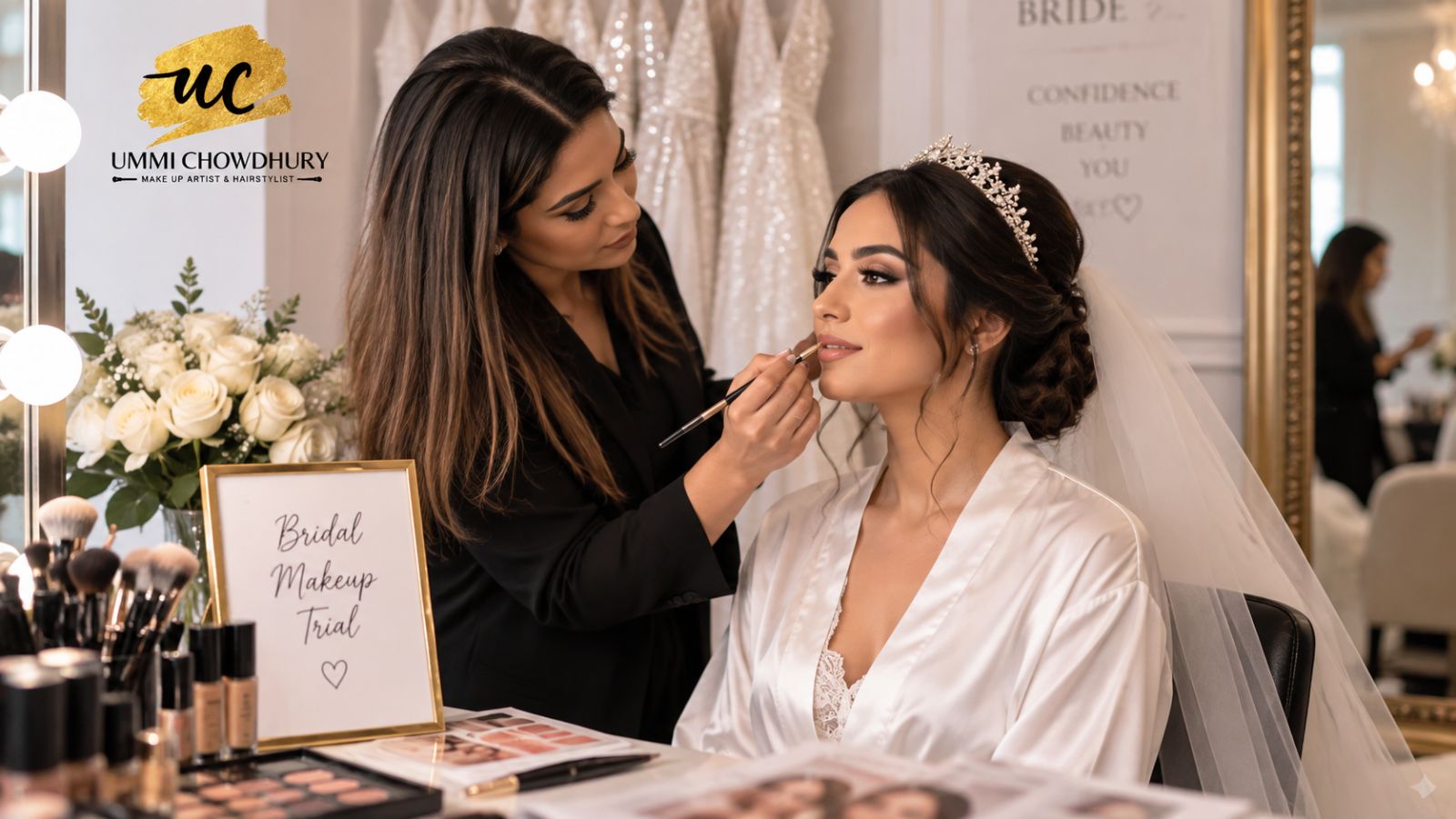
If you are booking a bridal makeup artist in London, preparation is helpful. Bring your ideas. Know what you like. Also be honest about what you do not like. You do not need to arrive with everything decided.
Your makeup artist can guide you through the options. This checklist covers the main things to do before your trial. It also explains what to bring, how to prepare your skin, and what questions to ask during your appointment. A reputable wedding makeup artist in London can give the best wedding looks.
There is no need to try an entirely new makeup application on your wedding day. Testing lets you preview your final appearance before the wedding day.
This helps you to examine some aspects, such as:
The trial should help your professional bridal makeup artist understand what feels right for you.
There are many things you need to focus on during bridal makeup in London.
Try not to leave your trial until the last minute. Most brides schedule their trial between 4 and 8 weeks prior to the wedding. It all comes down to when you plan to get married and whether the makeup artist is free. If your wedding is going to be hectic, it makes sense to book in advance.
In addition, your trial will allow you to make adjustments. You may decide that you prefer a softer eye. You may want a different lipstick. You may find that you like a lighter foundation. Having a little time between the trial and wedding day can make these changes easier.
Think about your normal makeup routine. Do you usually wear foundation? Do you prefer matte or glowing skin?
These small details matter. A bridal look should still feel like you. If you rarely wear heavy makeup, a very strong look may feel uncomfortable. If you normally enjoy defined eyes, you may want a little more intensity for your wedding. Tell your MUA what you normally use and what you avoid. Honest communication makes the bridal skin prep more useful.
Good makeup starts with suitable skin preparation. You do not need to completely change your skincare routine before your trial. In fact, trying several new products immediately before the appointment may not be helpful. Keep your routine simple and familiar.
For example, focus on:
If your skin is sensitive, tell your makeup artist. Also mention any known reactions to cosmetics or skincare products. Your MUA can then discuss suitable options.
A bridal makeup artist in London’s trial is not the ideal time to experiment with several new skincare products. A new product can sometimes cause redness, dryness, or irritation. If you have a skincare treatment planned, consider its timing carefully.
Strong treatments or procedures close to your trial may affect how your skin looks and feels. If you already have a skincare professional, follow their advice. The goal is simple. Arrive with skin that is comfortable and familiar to you.
Ask your makeup artist how they want you to arrive. Many artists prefer clean skin without heavy makeup. This allows them to properly assess your skin and prepare it for makeup.
If you need to arrive with skincare on, follow the MUA’s instructions. Avoid arriving with several layers of heavy products unless your artist has requested them. Your makeup artist can then work out which preparation products are suitable. This also makes the appointment more efficient.
Your makeup should work with the rest of your bridal look. Bring useful information about your wedding.
For example:
The venue can also matter. A daytime garden wedding may call for a different approach from an evening reception. Your makeup artist can consider the overall setting when discussing your look.
If your dress is already chosen, show your makeup artist a photograph. The dress style can help guide the overall makeup direction. A simple dress may work well with different makeup styles. A highly detailed or traditional dress may influence the level of definition you prefer. The same applies to accessories. This is to create a balanced bridal look.
Your hair and makeup will appear together. If you already know your hairstyle, tell your makeup artist. A soft updo, loose waves, or a sleek hairstyle can create different overall impressions.
You can also bring a hairstyle reference. Your MUA can then consider how visible the eyes, cheeks, and lips will be. This is particularly useful if you are planning a veil or statement hair accessories.
Foundation matching is one of the most important parts of the trial. The shade should work with your skin rather than simply matching your hand. Your makeup artist may test different shades before choosing the most suitable option.
The finish also matters.
You may prefer:
Tell your makeup artist about your skin.
For example, you may have:
Your skin can also change throughout the year. The products used should suit the condition of your skin on the wedding day. If you normally become oily around your T-zone, mention it. If foundation tends to settle around certain areas, tell your MUA. These details can help with the bridal makeup trial.
Eye makeup is another important part of the trial. Think about the level of definition you want. You might prefer soft brown tones. You may want a classic black liner. You may also prefer a more natural eye with individual lashes. Try to describe the feeling you want.
For example:
Your makeup artist can then work within that direction. If you wear glasses, bring them. Your MUA can see how your eye makeup works with them.
False lashes can change the overall appearance of bridal makeup. You do not have to wear them if you do not want to. If you are considering them, use the trial to test different styles. Some brides prefer individual lashes. Others prefer strip lashes.
Your eye shape and desired finish can affect which style works best. If you have never worn lashes before, tell your MUA. The trial is a good time to see how they feel.
Your lipstick should feel comfortable. Think about whether you want a nude, pink, peach, rose, berry, or another shade. You can bring your own favourite lipstick if you have one. Your makeup artist may also suggest a few options. Test the colour with the rest of your makeup.
It could be a very long day at the wedding. You could spend 8-12 hours or even longer with makeup on. It could also involve pictures, dancing, meals, changes in weather conditions, and emotions. Ask your wedding makeup artist in London how they plan to keep the makeup on.
It might involve methods of skin preparation, setting makeup, powdering, and touching up. No kind of makeup will stay like it was all day long. There are various things that could affect its longevity. Good planning can still help.
London weather can change. Rain, humidity, cold temperatures, and warmer summer days can all affect makeup. Your wedding season is therefore worth discussing. Tell your makeup artist whether your ceremony and reception are indoors or outdoors. If photographs will be taken outside, mention this too. Your MUA can then consider suitable products and preparation. The final makeup should be practical for the conditions as well as attractive in photographs.
A simple checklist can keep your appointment organised.
Before your makeup consultation, check that you have:
You do not need to bring a huge folder. A phone with a few saved images is usually enough.
The trial is also a good time to discuss timing. Ask how long your wedding day makeup planning may take. The exact time depends on the number of people and the makeup styles required. This can help your wedding morning run smoothly.
Your preparation for the trial does not have to be complex. First, gather your wishes. Provide 3-5 reference photos. Give information to your MUA about your skin. Talk about your dress and hairstyle.
Do not complicate your skincare prior to the trial. During the trial, assess your foundation, your eyes, lashes, lips, and your overall makeup. Discuss with your bridal makeup artist in London your wedding day schedule and touch-ups.
Most importantly, express yourself. If there is something that does not suit you, let your wedding makeup artist in London know. Ummi Chowdhury MUA can be the best for you for your wedding day look.
Many brides arrange their trial around 4–8 weeks before the wedding. However, timing depends on your wedding date, makeup artist availability, and whether you expect to make several changes.
Bring around 3–5 makeup reference images, plus photographs of your dress and hairstyle if available. You can also bring your preferred lipstick and a list of makeup preferences.
Ask your makeup artist first. Many artists prefer clean skin so they can properly assess and prepare it. Follow the instructions given by your MUA before the appointment.
The time varies between makeup artists and the amount of testing required. Allow enough time for consultation, skin preparation, makeup application, photographs, and possible adjustments.
Yes. The purpose of a trial is to test the look. If you do not like the lipstick, eye makeup, foundation finish, or another detail, discuss it with your makeup artist.
Please complete the form below, to request a quote, and we’ll be in touch. Or you can call us 07534 814316 and our specialists will provide the necessary help!
Ummi Chowdhury MUA is a professionally trained freelancer specialising in hair and makeup services for grand events and parties. An authorised makeup artist with combined experience, Ummi is all set to establish the perfect dazzling look as per your desire.


